Hog Panel Fence Installation for Houston Homes, Farms, and Large Properties
Hog panel fence installation gives Houston homeowners and property owners a strong, open fence design that can provide security without hiding the surrounding landscape.
Once used mainly on farms and ranches, hog panel fencing has become a popular option for modern homes, acreage properties, gardens, pet areas, and outdoor living spaces. The combination of sturdy wire panels and a wood or metal frame creates a fence that feels open, clean, and custom-built.
It can work well around a backyard, along a large property line, beside a driveway, or around an area that needs added protection. The key is choosing the right panel, frame, posts, gates, and layout for the way the property will be used.
What Is a Hog Panel Fence?
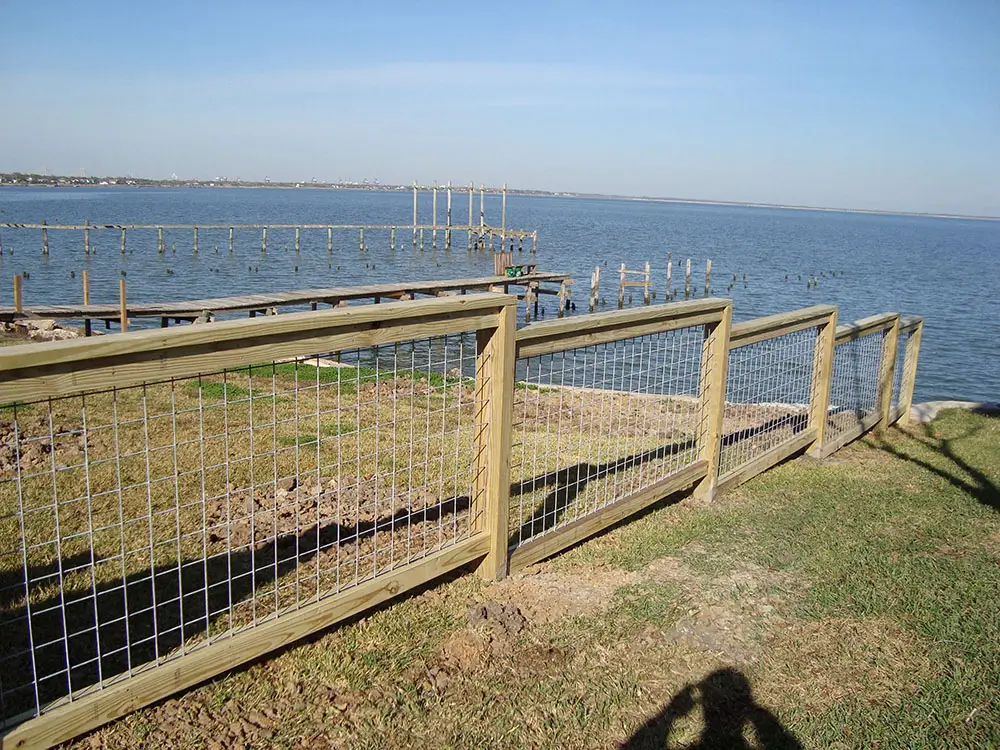
A hog panel fence is built with rigid metal wire panels attached between fence posts. The wire runs both horizontally and vertically, creating a grid. Each crossing point is welded together, which helps the panel hold its shape.
Unlike wire fencing sold in flexible rolls, hog panels are generally rigid and self-supporting. The panels are installed in sections instead of being stretched along the fence line.
Hog panels are one form of agricultural fencing. This Wikipedia page on agricultural fencing explains that hog and cattle panels use heavy wire welded at each intersection and are commonly sold as firm panels instead of rolls.
For residential use, the metal panel is often placed inside a wood frame. This gives the fence a more finished appearance and helps it match decks, gates, pergolas, and other outdoor features.
Why Are Homeowners Choosing Hog Panel Fencing?
Many homeowners want a fence that creates a clear boundary without making the yard feel smaller.
A solid privacy fence blocks outside views, which is helpful in many neighborhoods. On a large lot, wooded property, or home with a scenic backyard, a solid fence may hide the very features the owner wants to enjoy.
Hog panel fencing keeps the view open.
Sunlight and air can move through the fence. Landscaping remains visible. Homeowners can still see trees, gardens, ponds, green space, and other areas beyond the fence line.
The finished fence can also have a more custom appearance than a basic wire fence. A cedar frame, stained wood posts, black metal panels, and matching gates can create a design that fits both traditional and modern homes.
Where Can a Hog Panel Fence Be Used?
Hog panel fencing can serve several purposes on one property.
It may be installed around:
- Backyards
- Large residential lots
- Acreage properties
- Gardens
- Dog runs
- Pool equipment areas
- Outdoor kitchens
- Patios
- Chicken enclosures
- Small livestock areas
- Community gardens
- Commercial landscaping
- Ranch-style properties
The intended use should guide the design.
A decorative garden fence may need a different height and panel size than a fence built to contain dogs. A fence along a wooded property line may need stronger posts and a different layout than a short enclosure around raised garden beds.
Homeowners should explain how they plan to use the fenced space during the estimate. That allows the fence contractor to recommend a practical design instead of installing a one-size-fits-all system.
Is Hog Panel Fencing Good for Dogs?
Hog panel fencing can be a good option for dog owners, but the panel openings, fence height, and ground clearance matter.
Smaller dogs may be able to pass through larger openings. Athletic dogs may need a taller fence. Dogs that dig may require extra attention along the bottom of the fence.
The contractor should consider:
- The size of the dog
- How high the dog can jump
- The size of the panel openings
- Space below the bottom rail
- Gate latch placement
- Areas where the ground slopes
- Possible digging locations
A fence should be designed around the animal it needs to contain. The fact that a panel is called a hog panel does not mean every panel style will work for every pet.
A site visit can help identify low spots, drainage paths, and uneven ground where a dog might find an opening.
Wood-Framed Hog Panel Fences
Wood-framed hog panel fencing is one of the most common residential designs.
In this style, the wire panel sits inside a frame made with wood posts and rails. The wood gives the metal panel support and creates a more polished appearance.
Cedar is often selected because of its natural color and appearance. It can also be stained to complement the home, deck, gate, or other wood structures on the property.
The frame design may include:
- A top and bottom rail
- Full framing on all four sides
- Wide wood posts
- A cap board
- Decorative post caps
- Horizontal trim
- Matching framed gates
The details have a major effect on the finished look. Thin framing may feel more rustic. Heavier framing creates a stronger visual border and may look more like a custom residential fence.
The installer should also secure the panel so there are no sharp edges, loose corners, or uneven sections.
Metal-Framed Hog Panel Fences
A metal frame can give hog panel fencing a more industrial or modern look.
Steel posts and rails may be used instead of wood, depending on the design and property. The metal can be painted or coated to create a uniform finish.
A metal-framed fence may work well around contemporary homes, commercial properties, outdoor dining areas, or spaces with other metal features.
The frame and panel should still be chosen as a complete system. Mixing materials without planning for movement, rust protection, attachment points, and gate weight can lead to problems later.
The right frame depends on appearance, budget, fence height, site conditions, and expected use.
Hog Panel Fences Compared With Privacy Fences
Hog panel fencing and privacy fencing serve different needs.
A privacy fence is the stronger choice when the goal is to block views, reduce visual distractions, and create a private backyard. Hog panel fencing is better suited for owners who want a boundary while keeping the property visible.
Some homeowners use both.
A solid privacy fence may be installed beside neighboring homes, while hog panel fencing is used along the back of the property where the yard faces trees, water, green space, or open land.
This mixed design can provide privacy where it is needed while avoiding a closed-in feeling across the entire yard.
Property owners considering both options can review the Texas Fence guide on professional fence installation before deciding which style fits each part of the property.
Plan Gates as Part of the Original Design
The gate should look like part of the fence instead of an added piece.
A framed hog panel gate can use the same wire, wood, trim, and finish as the main fence. The gate opening should also be wide enough for the people, lawn equipment, carts, trailers, or vehicles that need access.
Important gate decisions include:
- Walk gate width
- Double gate width
- Hinge direction
- Latch placement
- Gate post strength
- Ground clearance
- Self-closing hardware
- Locking options
- Access for lawn equipment
Large gates place more weight and movement on the posts. Those posts may need additional support to keep the gate aligned.
Sloped ground also requires careful planning. A gate needs enough room to swing without dragging while avoiding a large gap below it.
These details are easier to solve before installation begins.
How Houston Property Conditions Affect the Fence
Houston-area properties can have clay soil, soft ground, drainage areas, tree roots, irrigation systems, and places that remain wet after storms.
Each condition can affect the installation.
Fence posts need to support the frame and keep the panels aligned. If posts shift, the fence line may begin to lean and gates may stop closing correctly.
The contractor should inspect:
- Drainage paths
- Low areas
- Soil conditions
- Large tree roots
- Sprinkler lines
- Buried utilities
- Retaining walls
- Sloped ground
- Existing concrete
- Access for installation equipment
Hog panels are built with straight lines and visible grids. Poor alignment can stand out quickly. Proper layout and post installation help create an even, finished fence line.
What Affects Hog Panel Fence Costs?
There is no single price for every hog panel fence.
The final cost depends on the complete design, materials, property conditions, and amount of labor required.
Major pricing factors include:
- Total linear footage
- Fence height
- Panel type and wire gauge
- Wood or metal framing
- Post size and spacing
- Number of gates
- Gate width
- Staining or painting
- Old fence removal
- Brush clearing
- Slopes and soil conditions
- Custom trim and cap boards
A simple garden enclosure may cost far less than a full backyard fence with cedar framing, several gates, and difficult terrain.
Price per foot can be helpful for early planning, but it does not tell the full story. Two fences with the same length may have very different costs based on framing, panel quality, gates, and site preparation.
A detailed estimate should explain what materials and work are included.
Check HOA Rules and Property Lines
Some homeowners associations have rules about fence materials, height, color, placement, and visibility.
Hog panel fencing may be approved in one part of a neighborhood and restricted in another. Homeowners may need to submit pictures, drawings, material details, and a property survey before work begins.
A survey can also help confirm the legal property line. Existing fences, trees, and mowing patterns are not always accurate boundary markers.
Property owners should identify easements, utility access areas, and drainage spaces before finalizing the fence location.
Taking care of these items early can reduce delays and prevent costly changes after installation.
Choosing a Hog Panel Fence Contractor
Hog panel fencing may look simple, but a clean installation requires careful framing, straight posts, even panel placement, and well-built gates.
Ask potential contractors about:
- Experience with hog panel fences
- Residential design options
- Panel and framing choices
- Gate construction
- Post installation methods
- Staining or finishing
- Removal and cleanup
- Project communication
- Similar completed projects
Texas Fence has served residential and commercial property owners in Houston and surrounding areas since 2003. The company builds custom fences and gates with wood, metal, and other materials based on the needs of each property.
Request a Hog Panel Fence Estimate
Before requesting an estimate, think about the main reason for the fence, the areas that need gates, the amount of visibility you want, and the hog panel fence style that fits the property.
Pictures of hog panel designs you like can help explain your preferences. A copy of the property survey may also help with early planning.
Texas Fence can review the fence line, discuss framing and panel options, and help determine how the design should work with the property. Property owners can request a free fence estimate and provide project details through the online form.
A hog panel fence can be practical, attractive, and built around the way you use your property, so isn’t it worth planning the details before the first post goes into the ground?