Replacing a Backyard Fence When You Have Dogs: What Is Best Plan?
Replacing a backyard fence when you have dogs starts with a plan for the hours the yard will be open. The new fence can be stronger and better suited to your pets, but the old one has to come down first. We need to talk about where the dogs will be during removal and installation, which gate they use, and the places they might squeeze through when the work is done.
That sounds obvious until a crew arrives with tools and the dog is waiting at the back door for its usual morning run. A fence project changes the routine for a day or more. The useful plan covers both the temporary opening and the finished yard.
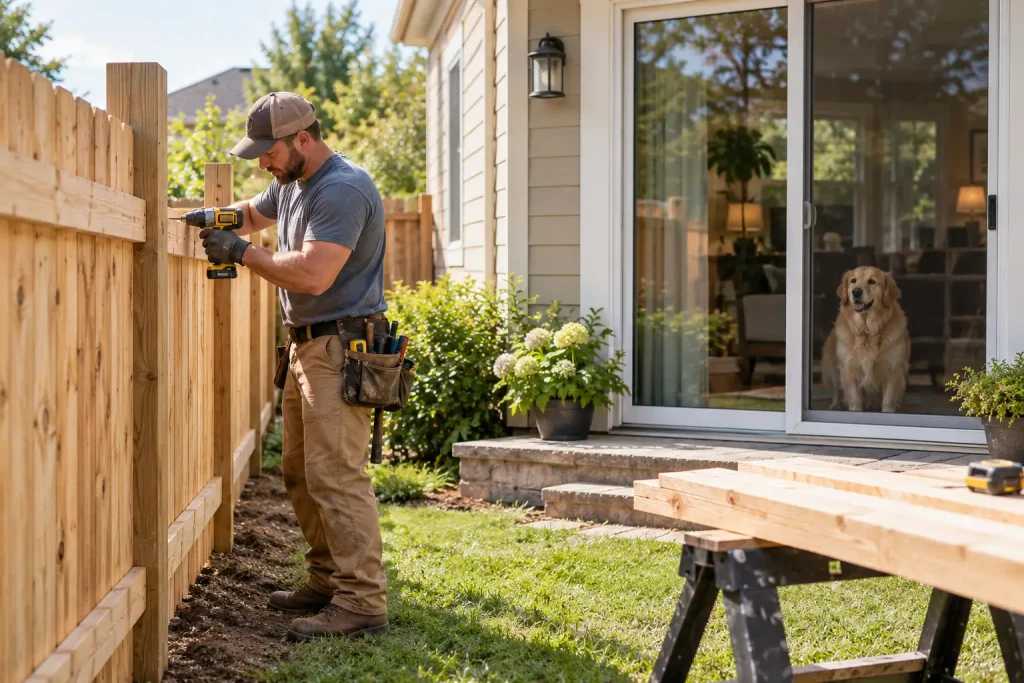
Decide Where the Dogs Will Spend Work Hours
Keep pets away from the work area while the old fence is removed, posts are set, and materials are carried through the yard. A leash or someone holding a collar at the back door is a fragile plan when people need to move in and out repeatedly.
You might use an indoor room, a different fenced area, a trusted friend, or boarding for the relevant days. Pick a place your dog can actually tolerate. A dog that barks at unfamiliar workers or bolts when a door opens needs a more secure arrangement than a calm dog that sleeps through the afternoon.
Ask how the crew will enter the property and when the boundary may be open. The schedule can change with weather or site conditions, so keep the pet plan flexible. Do not assume the yard is secure again just because most of the new pickets are up. Wait until the gates and the entire line have been checked.
Show Us the Escape Route
Walk the yard before the estimate and point out where your dog has tested the old fence. Is there a dug-out spot beside the gate? A gap where the ground drops? A loose board behind the shrubs? These details matter more than a general request for a “dog-proof fence.”
No fence should be described as escape-proof for every dog. A small dog may find a narrow opening at a corner. A larger dog may push at a weak gate or clear a low section. A dog that digs presents a different problem from one that jumps. Tell us what yours does so we can discuss the height, lower edge, gate, and layout with that behavior in mind.
Texas Fence builds residential wood fences in several styles and can include matching gates. We look at the actual yard rather than treating every straight stretch and corner as the same detail.
Pay Attention to the Bottom of the Backyard Fence
Houston yards do not always stay level along the property line. One corner may sit higher than the lawn. Another may dip near a drainage path. A fence that looks level from the patio can leave an opening at the low point.
There is a tradeoff to discuss. Taking the boards close to the ground may reduce a visible gap, but wood in constant contact with soil and pooled water can be harder to maintain. Raising the bottom everywhere without looking at the dog may leave an easy exit. We examine the grade, water movement, and your pet’s size before deciding how to build that edge. In some layouts, a rot board or a change in panel layout is worth considering. The solution depends on the site.
Check the space near structures as well. The end of a fence beside a garage or an existing wall can leave a narrow passage if the tie-in is not planned. A pet will find the gap that a person barely notices.
The Gate May Matter More Than the Long Fence Line
Most owners watch the broad fence panels. Dogs often watch the gate. They learn when someone carries groceries through it, how the latch sounds, and whether the bottom corner has begun to lift.
Tell us who uses the gate and what they carry through it. A side gate for trash cans needs a comfortable opening; a gate that is too awkward to use may be left ajar. The frame, hinges, latch, post, swing path, and ground clearance all work together. A heavy gate needs support that suits its size and repeated use.
If a child or visitor can operate the latch, think through the household routine. A latch can help keep the gate closed, but someone still has to close and check it. We can discuss hardware and placement; you should also decide how the family will manage the gate after installation.
Plan for Neighbors, Landscaping, and Access
A shared fence line affects the yard on both sides. Tell neighbors when work is expected and whether their pets also use the space. Clarify access with them before the crew arrives. If a property line is uncertain, get it resolved through the proper records or survey process rather than asking the installer to guess from the old fence.
Move items away from the line where possible: toys, planters, hoses, stored lumber, or a kennel. Mark irrigation heads and lines you know about. Point out plants you want to protect. We can discuss the route for material and debris, but the crew needs room to work safely and set posts.
Our residential fence installation service covers site layout, old fence removal, gates, and a final walkthrough. For a pet household, the practical question is where your dog will be while that work happens and how you will inspect the finished boundary together.
Check the Yard Before the First Unleashed Run
When the work is complete, walk the full line. Look from the dog’s height at corners, gates, slopes, and the connections to buildings or older fencing. Open and close each gate several times. Check that the latch engages and that no debris, wire, nails, or sharp offcuts remain where the dog will play.
Keep your dog with you during that first look. If something seems uncertain, raise it before relying on the new fence as containment. The final walk is a good time to ask about care for the wood, gate adjustments, and any area that may need watching as the yard changes.
Bring Your Dog’s Habits to the Estimate
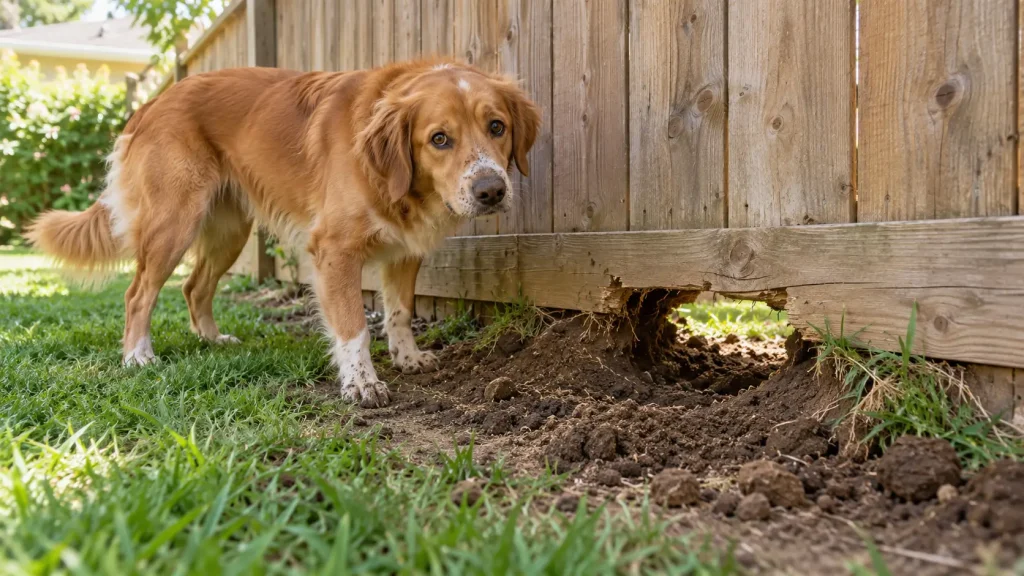
Photos of escape spots and a short description of your routine are useful. Show us the gate you use daily, any low areas after rain, and the side of the yard where neighbors have pets. We can then build the fence estimate around a real yard and a real animal, not an imaginary perfectly flat lot.
Texas Fence installs residential fencing throughout the Houston area. Contact our team or call (281) 807-7900 to talk through your fence replacement and the workday plan for your dogs.