Mixed Material Fences in Houston: Best Combinations
A mixed material fence uses two or more materials within the same fence system.
Some Houston homeowners choose to combine wood, iron, masonry, or metal framing within one fence project. The reason is usually practical, visual, or both. One section of the property may call for privacy. Another may need an open view. The front entrance may need to coordinate with brick or stone already used on the home.
Texas Fence installs wood, iron, masonry, and custom fences throughout the Houston area. For properties where more than one material makes sense, those materials can be planned as parts of one fence design.
Here are some of the combinations homeowners may consider.
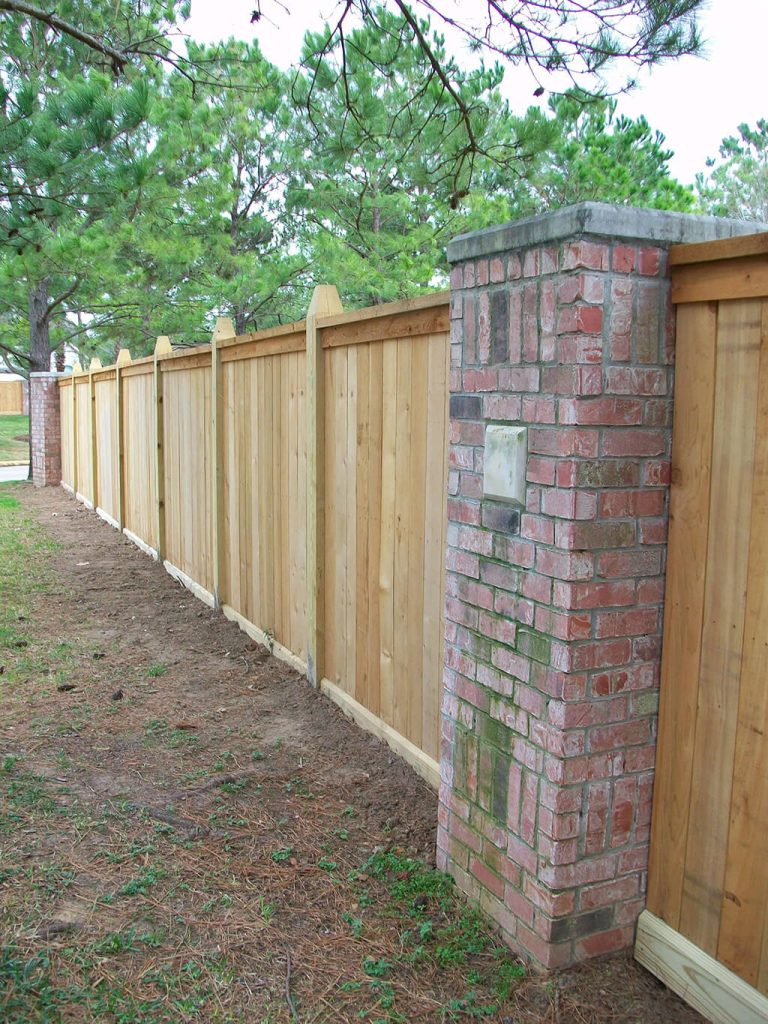
What Is a Mixed Material Fence?
A custom fence does not have to use the same material around an entire property.
Examples include:
- Cedar fencing with iron sections
- Wood panels between masonry columns
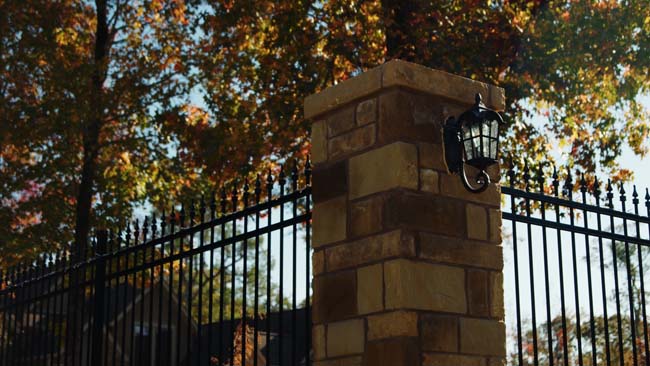
- Iron panels between brick or stone columns
- Wood fencing with metal posts or framing
- Wood privacy fencing connected to decorative iron fencing
- Masonry columns framing an iron or wood gate
The materials do not have to alternate along the entire fence line.
A property may use cedar fencing in the backyard and iron fencing near the front entrance. Another project may use wood along the sides of the property with masonry columns only at the driveway.
The layout depends on what each section of the property needs.
Combining Wood and Iron
Wood and iron can serve different purposes within the same fence project.
A solid wood section blocks the direct view through that portion of the fence. An iron section remains open between the pickets or rails.
That difference can be useful when the homeowner wants privacy in one area and visibility in another.
For example, a homeowner might choose wood fencing:
- Along a backyard property line
- Around an outdoor living area
- Beside a neighboring property
- Near areas where visual screening is wanted
Iron may be considered:
- Near the front of the property
- Around a courtyard
- Along an area where the homeowner wants to retain a view
- At a decorative entrance
- As part of a gate
The design should account for how the two sections meet.
Fence height, post spacing, top lines, finishes, and gate details can be coordinated where the materials change. When those details are planned together, the transition for the mixed material fence can be designed intentionally rather than handled only as a construction connection.
Wood Fencing with Masonry Columns
Wood panels between masonry columns are another option for custom residential fencing.
The wood section can provide a solid fence surface, while brick, stone, or other masonry can be used at selected points along the fence line.
Masonry may already be present on the house, entrance, columns, or other parts of the property. In those situations, the homeowner may choose to repeat a similar material in the fence design.
The materials do not have to match exactly.
Color, texture, scale, and the architectural details of the property should be reviewed before selecting the masonry.
The number of columns can also vary.
Some projects may use columns throughout the fence line. Others may use masonry only at:
- Driveway entrances
- Walk-through gates
- Corners
- Changes in fence direction
- Front property lines
This allows masonry to be part of the design without requiring it in every section.
Iron and Masonry Fencing
Iron panels can also be installed between masonry columns.
This type of fence remains visually open between the iron components. The masonry columns create solid vertical elements at selected intervals.
Homeowners may consider this combination for areas such as:
- Front yards
- Driveway entrances
- Courtyards
- Decorative perimeter fencing
- Properties where the view through the fence is important
The dimensions of the iron sections, spacing of the columns, gate locations, and total fence height should be planned together.
Masonry and iron also have different construction requirements. The design and installation need to account for each material rather than treating the entire project as though it were one fence type.
Mixed Material Fences Can Be Used in Different Parts of the Property
Not every section of a residential property has the same purpose.
The backyard may need more visual screening than the front yard.
A driveway entrance may require a gate with a wider opening than a standard walk-through gate.
A pool area may be subject to specific barrier and gate requirements.
A front mixed material fence may be selected partly for how it relates to the home and street-facing portion of the property.
These conditions can be addressed individually when the fence is being designed.
For example, a property could use:
- Cedar along the rear boundary
- Wood and masonry along a side yard
- Iron near the front entrance
- A custom metal driveway gate
- Masonry columns at the primary entrance
That is only one possible layout. The appropriate combination depends on the actual property, applicable requirements, and the homeowner’s priorities.
Mixed Material Fence Costs
A mixed-material fence cannot be priced accurately from the number of materials alone.
Several parts of the project affect the quote.
These may include:
- Total fence length
- Fence height
- Wood species and grade
- Type and amount of iron fabrication
- Number and dimensions of masonry columns
- Gate type
- Gate width
- Automatic gate equipment, if included
- Existing fence removal
- Property access
- Grade changes
- Site conditions
- Finish details
A fence that uses two materials is not automatically more expensive than every single-material fence.
A basic mixed material fence design may cost less than an elaborate fence built entirely from custom iron or masonry. The actual comparison depends on the specifications of both projects.
For that reason, homeowners comparing options should compare complete designs rather than assuming the material count determines the price.
Plan Gates With the Fence
Gate design should be addressed while the fence layout is being planned.
The gate has to fit the opening and connect to the surrounding fence or columns. Its dimensions also need to match the way the opening will be used.
A residential project may include:
- Walk-through gates
- Double gates
- Driveway gates
- Automatic gates
- Decorative entrance gates
The surrounding materials can affect the gate design.
For example, an iron gate between masonry columns requires a different layout from a wood gate installed within a cedar fence.
A mixed-material project may also use the gate as the point where two fence types meet.
Planning that transition before construction allows the posts, columns, fence sections, and gate dimensions to be laid out as one system.
Maintenance Should Be Considered by Material
Wood, iron, coatings, and masonry do not have identical maintenance requirements.
Exterior wood changes as it is exposed to sunlight, moisture, and weather. A stain or other appropriate exterior finish can be selected when the homeowner wants to change the appearance of the wood or add surface protection.
Painted or coated metal should be inspected for areas where the protective finish has been damaged and the underlying metal is exposed.
Masonry should be inspected for visible cracks, movement, or other changes that may need evaluation.
The amount and type of maintenance will depend on the materials used, their finishes, installation details, exposure, and site conditions.
A homeowner considering several materials should ask what maintenance applies to each one rather than assuming the entire fence will have one maintenance schedule.
Consider the Existing Property Before Choosing Materials
A mixed-material fence has more design variables than a basic single-material layout.
That makes the existing property an important part of the planning process.
Details to review can include:
- Exterior brick or stone
- Roof and trim colors
- Existing metalwork
- Driveway location
- Outdoor living areas
- Pool location
- Landscaping
- Views from the house
- Views from the street
- Neighboring properties
- Gate locations
- Changes in elevation
These conditions do not dictate one correct fence style.
They provide information that can be used when deciding which materials belong in each area.
Custom Mixed Material Fence Installation in Houston
Texas Fence installs residential wood, iron, masonry, gates, and custom fencing throughout Houston and surrounding communities.
For a mixed-material project, the first step is determining what the fence needs to do in each part of the property.
Where is privacy needed?
Where should the view remain open?
Which materials already appear on the home?
Where are the gates located?
Are there areas where one fence material makes more sense than another?
Once those questions are answered, the fence can be designed around the property rather than forcing one material into every section.
If you are considering a custom wood, iron, masonry, or mixed material fence in Houston, Texas Fence can evaluate the property and prepare a quote based on the design you choose.