Pool Safety Fence Installation in Houston: Questions to Answer Before Choosing a Fence
We install pool safety fences for Houston homeowners who need a secure pool barrier, dependable gate access, and a fence design that fits the rest of the backyard.
Most customers who contact us already understand that they need a fence around the pool. Their bigger questions are more specific.
Can the existing backyard fence serve as the pool barrier? Should the pool be separated from the rest of the yard? Is iron, aluminum, or wood the better choice? Where should the gate go? Can the fence work around an outdoor kitchen, patio, or pool equipment area?
Those decisions affect more than appearance. They determine how people enter the pool area, how easily the gate closes, how much of the pool remains visible, and how well the fence works with daily backyard use.
At Texas Fence, we treat pool safety fencing as its own type of project. We plan the posts, fence height, spacing, gates, hardware, and layout around the pool area instead of treating it like a standard property-line fence.
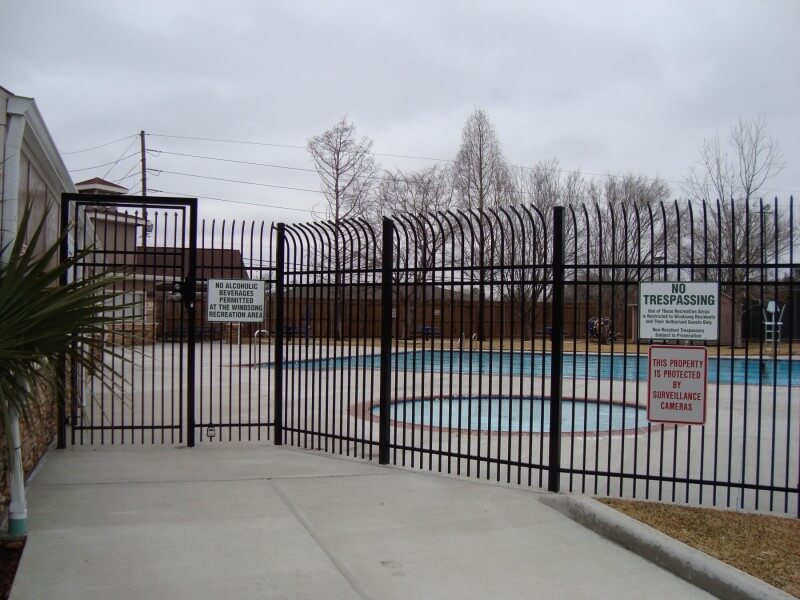
Can an Existing Backyard Fence Work as a Pool Barrier?
Sometimes an existing backyard fence can be part of the pool enclosure. That does not mean every fence around a backyard is suitable for that purpose.
We first look at the fence’s condition and layout.
A wood fence may provide plenty of privacy but have rotted posts, loose pickets, gaps underneath, or a gate that no longer closes. An older iron fence may look solid while having rusted connections or spacing that does not fit current project requirements.
We also look at how someone can enter the pool area.
If a side gate opens directly into the backyard, that gate may become one of the most important parts of the pool barrier. If the home opens directly onto the pool deck, the owner may want a separate fence around the pool to create another layer of separation.
We help customers determine if the current fence can remain, needs repairs, or should be replaced as part of the project.
A fence that looks fine from the patio may show different problems once we inspect the posts, gates, lower openings, and less visible sides of the property.
Should the Fence Surround the Pool or the Entire Backyard?
This is one of the first layout decisions we discuss during a pool safety fence estimate.
Some homeowners want the full backyard perimeter to serve as the enclosure. Others want the pool separated from the house, lawn, play area, and outdoor living space.
A fence placed closer to the pool can help control access while allowing children, pets, and guests to use another part of the yard. It can also create a clear boundary between the swimming area and the rest of the property.
A full backyard enclosure may make more sense when the lot is small, the pool fills most of the available yard, or an interior fence would interfere with the patio.
Neither layout is right for every home.
We look at:
- The distance between the home and pool
- Doors leading into the backyard
- Side yard access
- Patio and walkway locations
- Outdoor kitchens
- Fire pits and seating areas
- Pool equipment
- Lawn and play areas
- Pet access
- Landscaping and drainage
- Existing fence lines
We then help the homeowner compare layouts based on safety, movement, visibility, and appearance.
The goal is to build a fence that works when the family is using the yard, not just one that looks good on a drawing.
What Type of Pool Fence Should We Install?
We install pool safety fencing with iron, aluminum, wood, and cedar. We can also use chain link in locations where it is allowed and appropriate.
The best material depends on how much privacy the homeowner wants, the style of the home, the surrounding fences, HOA requirements, and the amount of pool visibility needed.
Iron Pool Fencing
Iron fencing works well for customers who want a strong, open-view pool barrier with a more formal appearance.
It allows the pool, landscaping, and patio to remain visible. This can be helpful for parents who want to see the pool area from another part of the yard.
We can customize iron fence heights, panel styles, gates, and decorative details. Our metal fences are fabricated to fit the property and powder-coated for long-term use in Houston’s heat, humidity, and storms.
Aluminum Pool Fencing
Aluminum offers a similar open appearance with less concern about rust.
It is often selected for modern homes, remodeled backyards, and properties where the homeowner wants a clean fence that requires less upkeep.
Aluminum can also be a strong choice near areas that receive regular water exposure from pool use, sprinklers, and Houston rain.
Wood and Cedar Pool Fencing
Wood is usually the better choice for the pool safety fence when privacy is a major goal.
A wood pool fence can block views from neighboring homes, streets, alleys, or other parts of the property. Cedar can also be used to create a warmer, more custom appearance around a pool and outdoor living space.
Some customers use wood around the outside of the backyard and iron or aluminum around the immediate pool area. This creates privacy at the property line while keeping the pool visible from the house and patio.
We help customers plan these materials as one complete fence design so the sections do not look disconnected.
Customers can compare more options on our pool safety fencing page and our iron and aluminum fencing page.
Why Is the Pool Gate So Important?
The pool gate is often used more than any other section of the fence.
Family members, guests, pool service technicians, landscapers, and maintenance crews may all use it. A gate that drags, sags, fails to close, or needs to be pulled into place can weaken the entire fence system.
We plan each pool gate around its actual use.
That includes:
- Gate width
- Gate location
- Swing direction
- Post size and support
- Hinge strength
- Self-closing hardware
- Self-latching hardware
- Locking options
- Ground clearance
- Access for pool equipment
- Access for service crews
We only install Grade 1 fencing materials and reliable name-brand hardware for long-term performance. Our pool fence projects can include custom gates, self-closing hardware, self-latching hardware, and layouts designed for the individual backyard.
A narrow walk gate may work for normal family use. A second or wider gate may be needed if equipment must be moved into the pool area.
We recommend making those decisions before installation. Adding a larger gate later may require removing panels, moving posts, and changing the original layout.
Does Texas Have Pool Fence Requirements?
Texas Health and Safety Code Chapter 757 includes standards for pool yard enclosures. The state law says the enclosure must generally be at least 48 inches high when measured from the side away from the pool. It also addresses gates, openings, latches, and other enclosure details.
Homeowners can review the official Texas pool yard enclosure law for more information.
Local rules may depend on the city, county, property type, permit, HOA, and details of the pool project. A new pool construction project may also have different review steps than replacing a fence around an existing pool.
We help customers plan around the known fence and gate requirements for the property. We also provide HOA and permit support when needed.
Homeowners should confirm all final requirements for their address before construction begins. A fence design that worked at another property may not be approved for a different location or layout.
Should We Install the Pool Safety Fence Before or After the Pool?
When a new pool is being built, we recommend discussing the fence before the pool project reaches its final stage.
The pool builder, fence contractor, landscaper, electrician, and outdoor living contractor may all need access to the same part of the yard. Installing the finished fence too early can create access problems. Waiting until the last moment can delay the completion or approval of the pool area.
We look at:
- Construction access
- Equipment paths
- Finished deck elevations
- Drainage
- Electrical and plumbing locations
- Final landscaping
- Gate placement
- Inspection timing
- Temporary barriers
- HOA approval
The final fence posts should be planned around completed surfaces and known underground work. Installing posts before drainage lines, decking, or utilities are finalized can lead to avoidable changes.
For pool remodels, we also look at which existing fence sections can remain during construction and which sections need to be removed.
Early planning gives everyone a clearer schedule.
Can We Replace Only the Pool Gate?
Sometimes the gate is the only part that needs immediate work.
A gate may sag because the posts are shifting. The hinges may be worn. The latch may no longer line up. The gate may have been built without self-closing hardware, or the opening may be too narrow for pool service equipment.
We inspect the gate and the surrounding fence before recommending a repair.
Replacing the hardware may solve the problem when the posts and frame are still strong. A new gate may be needed when the frame is bent, rotted, rusted, or too weak for daily use.
In other cases, the gate problem is a sign that the surrounding posts or fence sections are also failing.
We explain what can be repaired and what should be replaced so the homeowner can make an informed decision.
What Should a Pool Fence Estimate Include?
A pool safety fence estimate should describe the complete project.
A basic price per foot does not explain the gate hardware, post installation, material grade, removal work, custom fabrication, or site conditions.
Our proposal may include:
- Fence material and style
- Fence height
- Panel or picket spacing
- Post material and size
- Total estimated footage
- Number and size of gates
- Hinge and latch hardware
- Self-closing and self-latching features
- Custom fabrication
- Old fence removal
- Concrete or surface concerns
- HOA and permit support
- Project scheduling
- Cleanup and final review
We begin with a site review of the pool, current fences, access points, walkways, slopes, drainage, gates, and outdoor living areas. We then help the homeowner compare materials and approve a final layout before installation.
The estimate should answer more than how much the pool safety fence costs. It should explain what is being installed and how it will work.
Why Choose Texas Fence for Pool Safety Fence Installation?
We have installed residential and commercial fencing in Houston and surrounding communities since 2003.
Our pool safety fence work includes residential backyards, HOA communities, pool remodels, and community pool areas. Featured projects include Windsong Community Pool, Park Cypress Pool at Greentrails, and an eight-foot aluminum fence at Club Sienna Pool.
We provide:
- Grade 1 fencing materials
- Iron, aluminum, wood, and cedar options
- Custom-fabricated metal fencing
- Custom pool gates
- Reliable name-brand hardware
- Self-closing and self-latching gate options
- HOA and permit support
- Experienced installation crews
- Layout planning
- Post-installation support through our No-Fight Repair Assurance
We also communicate throughout the process because a pool fence project involves decisions that affect the entire backyard.
Service You Can Count On, From Start To Finish.
Request a Pool Safety Fence Estimate
Before requesting an estimate, think about who uses the backyard, where guests enter, how the pool service company gets access, and how much of the pool you want to see.
Pictures, surveys, HOA guidelines, pool construction plans, and examples of fence styles can help us understand the project.
We will review the pool area, inspect the existing fence, discuss gate locations, and help compare iron, aluminum, wood, cedar, and hardware options.
Houston-area homeowners can request a free pool fence estimate or call Texas Fence at (281) 807-7900.
When the fence controls access to your pool every day, shouldn’t the gate, materials, and layout be planned around the way your family actually uses the backyard?