HOA Fence Replacement for Houston Communities: What Boards and Property Managers Need Before Approving a Bid
We provide HOA fence replacement for Houston communities that need a clear plan for improving perimeter fences, shared fence lines, pool enclosures, gates, and common-area fencing.
An HOA fence project is rarely a simple matter of replacing a few damaged boards. One fence may run behind dozens of homes, border a busy road, surround a neighborhood pool, screen equipment, or control access to a community park.
The board must balance appearance, safety, resident concerns, budget limits, future maintenance, and the expected life of the new fence.
At Texas Fence, we have worked with HOA boards, property managers, builders, homeowners, and community associations throughout Greater Houston. We have completed neighborhood fencing and pool-area projects in communities that include Hearthstone, Greentrails, Steeplechase, Westfield, Concord Bridge, and Concord Colony.
Before an HOA approves a contractor, we recommend getting clear answers to the questions that can affect the cost and success of the entire project.
Does the HOA Need Fence Repairs or Full Replacement?
Many HOA projects begin when a board asks us to inspect one damaged section.
Once we walk the property, we may find that the visible problem is only part of the issue. Several posts may be leaning below ground. Rails may be pulling away from the posts. Pickets may have been replaced with different materials over several years.
The community may now have several fence heights, wood types, stain colors, and construction methods along the same perimeter.
We help boards separate the existing fence into three general conditions:
- Sections that can remain in place
- Sections that can be repaired
- Sections that should be replaced
This helps the board understand the condition of the full fence system instead of approving one repair at a time.
Repeated repairs may cost less during the current budget period, but they can start another cycle of service calls and emergency work. A complete assessment gives the association more information for deciding where repair work still makes sense and where replacement may offer better long-term value.
We can document problem areas with measurements, photos, material recommendations, and a defined scope of work. This gives board members something specific to review before approving the project.
Can We Complete the HOA Fence Project in Phases?
A full neighborhood fence replacement may be larger than the HOA can fund in one year.
We can often divide the work into phases so the community can address its highest-priority sections first. This may help the association plan around reserve funding, annual budgets, resident access, and other community projects.
A phased installation still needs to be designed as one complete fence system.
Before we begin the first phase, we recommend approving the main construction standards for the entire project. These standards may include:
- Fence style
- Fence height
- Post material
- Post spacing
- Wood species
- Stain color
- Cap and trim details
- Gate construction
- Gate hardware
- Access control requirements
Planning these details early helps us maintain a consistent appearance as later phases are completed.
We can also help the board prioritize the work. Leaning perimeter sections, damaged pool fencing, broken access gates, and fences beside busy roads may need attention before less visible areas.
The most noticeable section is not always the most urgent one.
What Should Our HOA Fence Proposal Include?
A fence board may receive three proposals that appear similar on the surface but describe three very different projects.
One proposal may include demolition and hauling. Another may leave old post concrete in the ground. A lower bid may use lighter posts, smaller gate frames, different fasteners, or a lower grade of wood.
We believe the board should be able to see exactly what it is approving.
Our HOA fence proposals can identify details such as:
- Estimated linear footage
- Fence height and style
- Post material and size
- Post spacing
- Wood species or manufactured fence product
- Rails, trim, and cap boards
- Fasteners and brackets
- Gate sizes and locations
- Gate hinges and latches
- Stain or paint requirements
- Old fence demolition
- Material hauling and cleanup
- Concrete removal
- Landscaping concerns
- Irrigation concerns
- Permit responsibilities
- Estimated project schedule
A proposal that only says “replace wood fence” leaves too many decisions unanswered.
We install several fence types that may be appropriate for HOA communities, including cedar privacy fencing, board-on-board fencing, horizontal fencing, iron fencing, aluminum fencing, chain link fencing, vinyl fencing, and Hardie Plank fencing.
We can also include details such as steel posts with wood wraps, community-approved stain colors, decorative trim, custom gates, and controlled access systems.
Boards can learn more about our experience on our HOA fencing contractor page.
Should Every Part of the Community Use the Same HOA Fence?
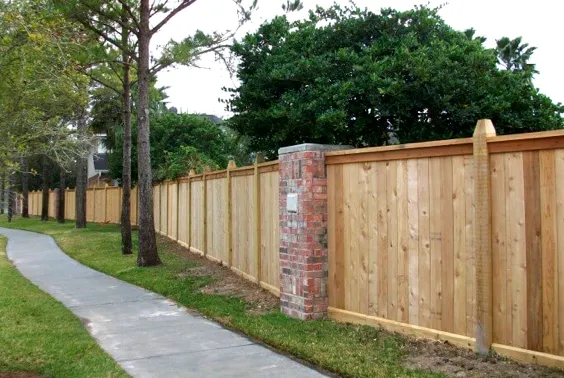
Using one material throughout the entire property may sound like the easiest way to create a consistent look. In practice, each area of the community may have a different purpose.
A perimeter HOA fence beside a major road may need privacy and a finished public-facing appearance. A pool fence needs secure access and visibility. A utility enclosure may need durability and ventilation. A park or walking trail may need an open design.
We help boards select fence materials based on the location and function of each section.
A community project may include:
- Board-on-board cedar fencing behind homes
- Iron fencing around a pool
- Chain link around equipment or maintenance areas
- Hardie Plank fencing for long-term screening
- Decorative metal fencing near entrances
- Coded gates at resident-only amenities
- Wider access gates for maintenance crews
These materials can still be planned as part of one community design.
Our goal is to provide a consistent appearance while making sure each fence section does the job the property requires.
How Will We Handle Resident Access?
Resident coordination can become one of the hardest parts of an HOA fence replacement.
Our crews may need to enter private backyards to remove the existing fence and install the new one. Residents may have pets, children, storage buildings, garden beds, playground equipment, irrigation systems, or landscaping near the fence line.
The property manager and board should create a resident communication plan before installation begins.
That plan should explain:
- Which homes will be affected
- When our crews will need access
- How much notice residents will receive
- What residents need to move
- How pets must be secured
- Who residents should contact with questions
- How temporary fence openings will be handled
- How landscaping or irrigation concerns will be reported
- What happens when we cannot access a yard
For phased projects, we recommend sending notices based on the actual work schedule for each group of homes. A general email sent several months before construction may not give residents the information they need when work reaches their property.
We coordinate our work with the community’s schedule so residents can continue using their homes and common areas with as little disruption as the project allows.
What Happens When Conditions Change During Construction?
Some problems only become visible after we remove the existing fence.
We may uncover rotted posts, large concrete footings, buried debris, tree roots, drainage problems, abandoned materials, or sections that were installed outside the expected fence line.
The board may also decide to change the design after seeing the first completed section.
Before construction begins, we recommend deciding who has authority to approve changes. A property manager may handle routine questions, while a board officer may need to approve added work or pricing.
Clear authority helps prevent delays.
We also document major changes so the board understands what was found, why the scope changed, and how the change affects the project cost.
A large HOA fence replacement requires communication throughout the job. The original proposal is important, but so is the process used to manage the unexpected conditions that can appear after demolition begins.
How Should the Board Use Its Reserve Study?
A community fence may already be included in the HOA’s reserve study.
The Community Associations Institute describes a reserve study as a budget planning tool used to prepare for the repair and replacement of shared community components.
We do not prepare the association’s reserve study. We can provide a detailed fence assessment and replacement proposal that may help the board, property manager, or reserve specialist update its planning for the new HOA Fence.
Our assessment may help answer questions such as:
- Which sections require immediate replacement?
- Which sections may remain in service longer?
- How could the project be divided into phases?
- Which materials may reduce future maintenance?
- What is the estimated current replacement cost?
- Which gates or access points need separate budgeting?
A detailed scope gives the association more useful information than a general price per foot.
Are the Community Gates Built for Daily Use?
Gates are often the most heavily used parts of an HOA fence system.
Pool gates, maintenance gates, walk gates, and vehicle gates may open hundreds of times each week. Weak hardware, undersized posts, poor alignment, or the wrong gate operator can create problems long before the surrounding fence needs service.
We review gates as individual parts of the project.
Our team builds custom wood and metal gates and can install access options that include:
- Keypads
- Card access
- Remote controls
- Gate operators
- Coded pedestrian gates
- Swing gates
- Rolling vehicle gates
A lawn crew may need a wide double gate. A neighborhood pool may require self-closing and self-latching hardware. A private park may benefit from controlled access. A vehicle entrance needs equipment designed for the expected amount of daily use.
We plan the post size, gate frame, hardware, opening width, ground clearance, and access system around the way the gate will actually operate.
Boards can review more information about our process and capabilities on our commercial fence installation page.
Why Does HOA Fence Experience Matter?
A contractor may build excellent backyard fences but still be unprepared for a neighborhood-wide project.
HOA fence replacement requires more than installation skill. It requires crew coordination, site planning, material management, resident communication, clean work areas, gate planning, and the ability to keep several sections moving at once.
We have served Houston and surrounding communities since 2003. Our work includes residential fencing, commercial fencing, neighborhood perimeter fencing, pool fencing, custom gates, and access control systems.
We also have experience with multi-phase work and projects that affect large numbers of residents.
Our HOA and community pool projects have included Park Cypress Pool at Greentrails, Windsong Community Pool, Club Sienna Pool, and Sheffield Community Pool.
That experience helps us understand the questions boards and property managers need answered before approving a major fence project.
Request an HOA Fence Assessment From Texas Fence
An HOA board needs more than a rough price per foot.
We can walk the property, review the existing fence, identify problem areas, inspect gates, discuss material options, and prepare a scope the board can evaluate.
We work with HOA boards, management companies, developers, homeowners, and managed communities throughout the Houston area. We can provide estimates for neighborhood perimeter fences, shared fence lines, pool enclosures, common areas, access gates, and phased replacement projects.
Boards and property managers can request a fence estimate from Texas Fence to begin discussing the property, priorities, budget, and project schedule.
When one fence decision affects an entire community, shouldn’t the board have a contractor who can provide more than a basic bid?