How Much Does a Commercial Fence Cost in Houston? Easy Guide 2026
If you’re planning a commercial fence project in Houston, one of the first questions is usually simple: how much is this going to cost?
The answer is not quite as simple.
Commercial fencing is rarely priced accurately by choosing a fence type and multiplying a basic price by the number of feet you need. The length matters, but so do the height, materials, gates, security requirements, site conditions, access points, demolition, and how the property is used every day.
A fence around a small office property is a very different project from securing a warehouse, apartment community, school, industrial yard, retail development, or several acres of commercial property.
At Texas Fence, we look at the full project before recommending a fencing system or providing a quote. That gives the property owner a much better idea of what the project will actually require instead of starting with a price that changes once the details are known.
What Determines Commercial Fence Cost?
Commercial fence cost usually starts with the size of the project, but linear footage is only one part of the calculation.
The biggest cost factors include:
- Total linear footage
- Fence material
- Fence height
- Material grade and strength
- Number and size of gates
- Manual or automatic gate operation
- Access control systems
- Privacy or security upgrades
- Existing fence removal
- Ground and site conditions
- Vehicle and equipment access
- Permitting or property requirements
- Custom fabrication
Two Houston businesses might each need 500 feet of fencing and end up with very different project costs.
One may need basic perimeter fencing around a storage property. The other may need decorative frontage, an automatic vehicle gate, controlled employee access, privacy screening, and a taller security fence around the back of the property.
The footage is the same.
The project is not.
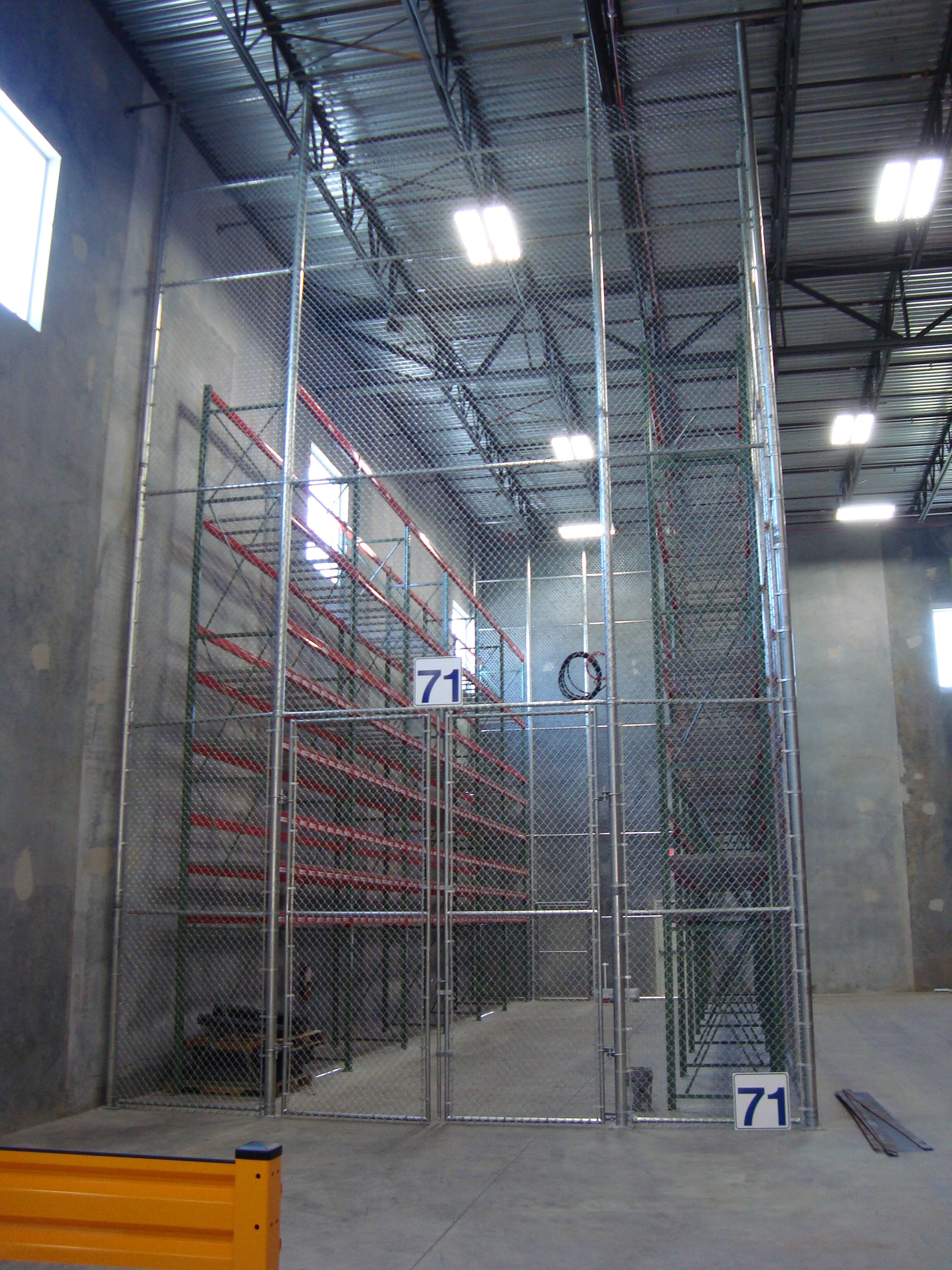
Chain Link Is Often the Most Cost-Effective Commercial Fence
For businesses that need to secure a large area, commercial chain link fencing is often one of the most economical choices.
It works especially well around warehouses, industrial properties, storage yards, schools, athletic facilities, construction sites, equipment yards, and other properties where security and perimeter control matter more than complete privacy.
The basic fence is only the starting point.
A commercial chain link system can also include:
- Taller fence heights
- Heavier posts
- Black vinyl-coated fabric
- Privacy slats
- Windscreen
- Security toppings
- Swing gates
- Slide gates
- Automatic gates
- Access control
Each addition changes the cost.
That is why asking, “How much does chain link fence cost per foot?” may not give a commercial buyer enough information to build a useful budget.
A better question is, “What chain link fence system will do the job we need it to do?”
For properties where long fence runs are needed, our commercial chain link fence installation is often worth considering because it can provide strong perimeter control without moving into the higher cost of more decorative fencing.
Commercial Iron and Aluminum Fencing Usually Costs More
There are commercial properties where appearance matters just as much as security. And that can affect the commercial fence cost.
Apartment communities, office buildings, retail centers, churches, schools, HOA properties, public facilities, and customer-facing businesses may not want chain link along the most visible parts of the property.
Iron and aluminum fencing can provide a cleaner, more finished appearance while still creating a strong boundary.
Commercial metal fencing may cost more because of the materials, fabrication, installation requirements, finishes, and design.
Custom sections, decorative features, masonry columns, changes in grade, and matching gates can increase the price further.
That does not mean every part of the property needs the same fence.
On some projects, it makes more sense to install decorative fencing where customers and visitors see the property while using a more cost-effective security fence around less visible areas.
That type of mixed fencing plan can help control the overall budget without giving up the appearance or security the property needs.
Commercial Wood Fencing Can Solve a Different Problem
Commercial fencing is not always about keeping people out.
Sometimes the goal is blocking the view.
Wood fencing can work well around dumpsters, equipment areas, apartment properties, employee areas, storage spaces, mechanical equipment, and other parts of a commercial property that should not be visible from the street or neighboring properties.
The cost depends on the fence height, wood species, construction style, post system, length, and site conditions.
Privacy fencing can also be combined with other materials when the property has different needs in different areas.
A business might use ornamental fencing at the entrance, wood fencing around an equipment area, and chain link along the back property line.
The best commercial fence design is not always one material used everywhere.
Gates Can Be a Major Part of the Budget
This is one of the biggest items business owners sometimes overlook when they first estimate a commercial fencing project.
A long, straight fence line is relatively simple.
Gates are not.
A commercial property may need pedestrian gates, employee entrances, delivery access, emergency access, wide equipment openings, or vehicle gates that open dozens or even hundreds of times each day.
Gate size matters.
So does the way the gate opens.
A manual swing gate is different from a large sliding vehicle gate. An automatic gate adds another set of equipment and installation requirements.
If the gate will be used for controlled entry, the project may also include:
- Keypads
- Card readers
- Remote controls
- Intercom systems
- Mobile access
- Entry logs
- Gate operators
- Safety equipment
- Cloud-connected access systems
We install access control systems with both new and existing commercial gates, allowing the entry system to be designed around the way the property actually operates.
Before pricing a commercial gate, we need to understand who will use it, how often it will operate, what types of vehicles need access, and how the business wants entry to be controlled.
Fence Height and Security Requirements Affect Price
A four-foot decorative fence and an eight-foot security fence are not the same project.
Taller commercial fences require more material and may require stronger posts, deeper foundations, different hardware, and additional installation work.
A higher-security property may also require features such as privacy screening, security toppings, reinforced gates, automatic entry systems, or controlled access points.
The goal should be to match the fence to the actual risk and use of the property.
Spending more on security features that are not needed does not make sense.
Neither does installing a light-duty fence around a property that needs serious perimeter security.
Existing Fence Removal Can Change the Quote
If there is already fencing on the property, we need to determine what happens to it.
In some cases, sections of an existing system may be usable.
In others, the old fence, posts, concrete, and gates need to be removed before the new installation begins.
Demolition and haul-off require labor, equipment, and disposal.
Existing concrete, retaining walls, drainage areas, utilities, landscaping, buildings, pavement, and other structures can also affect how the new fence is installed.
These conditions are difficult to account for with an online cost-per-foot calculator.
They are easy to see during a proper site evaluation.
Property Layout Matters More Than Many Buyers Expect
Commercial fence installation often has to work around the way a business operates.
Can our crews reach the fence line with equipment?
Does the property need to remain open during installation?
Can an entrance be temporarily closed?
Do delivery trucks need access throughout the project?
Are there areas where fencing must tie into a building, wall, existing fence, or gate?
Does the fence cross drainage areas or uneven ground?
These details can affect both labor and installation time.
For a commercial property, the least expensive fence on paper is not always the least expensive project to install.
Why Commercial Fence Cost Quotes Can Be So Different
If you receive three commercial fence quotes, do not look only at the final number.
Look at what each contractor is actually proposing.
A lower quote may use different materials, lighter posts, different hardware, fewer gates, a different fence height, or a different installation method.
Check whether the proposal clearly explains:
- Fence type
- Material specifications
- Fence height
- Post specifications
- Gate sizes
- Gate hardware
- Access control equipment
- Removal of existing fencing
- Site work
- Cleanup
- Project scope
- Warranty
You want to compare the same project against the same project.
Otherwise, you are comparing prices without knowing whether you’re buying the same thing.
The Cheapest Commercial Fence Cost Is Not Always the Lowest-Cost Fence
Commercial fencing is part of the property.
It may protect inventory, equipment, vehicles, employees, tenants, customers, or controlled areas.
It also has to deal with daily gate use, Houston weather, ground movement, landscaping, trucks, equipment, and normal wear.
Saving money at installation does not help much if gates sag, posts move, hardware fails, or parts of the fence need repairs sooner than expected.
That does not mean the most expensive proposal is automatically the best one.
It means cost should be evaluated along with materials, installation, expected use, maintenance, security, and service life.
How to Get an Accurate Commercial Fence Price
The most useful commercial fence estimate starts with the property.
We want to understand:
- What needs to be fenced?
- Why does it need to be fenced?
- Who needs access?
- What types of vehicles use the property?
- How much privacy is needed?
- What level of security is required?
- Which parts of the property are customer-facing?
- Are automatic gates or access control needed?
- Is existing fencing being removed?
- Are there future plans that should be considered now?
Those answers help us recommend a fence system that fits the property instead of simply selling a certain number of feet of fence.
Get a Commercial Fence Quote for Your Houston Property
Texas Fence provides commercial fence installation for businesses, property managers, developers, schools, public properties, warehouses, industrial facilities, and other commercial sites throughout the Houston area.
We install commercial chain link fencing, wood fencing, iron and aluminum fencing, gates, and access control systems based on the requirements of the property. Texas Fence currently describes its commercial systems as using commercial-grade materials and designs its fencing around the site’s security and operating needs.
If you’re budgeting for a commercial fencing project, the best place to start is with a site-specific estimate. We can review the property, discuss what you need the fence to accomplish, and build a proposal around the materials, gates, security features, and installation requirements involved.
When the fence may be protecting your property for years, doesn’t it make sense to know what a commercial fence costs before choosing the lowest number?